Bunting for Small Spaces: Apartment-Friendly Party Decor Ideas
October 13, 2026 - Event Inspiration

Bunting makes a room feel like a celebration before the first guest arrives. But if you rent, the phrase “just hammer a few nails” can turn a happy afternoon into a deposit argument. The good news is that most rooms already offer anchor points, and temporary display products have improved enough to handle lightweight fabric, paper, and card bunting without leaving holes. Here are seven ways to hang bunting without nails, along with small habits that keep walls, trim, and glass in the condition you found them.
Adhesive hooks are the first method most people reach for, and they work well on smooth, sealed surfaces: painted walls, tiles, glass, laminate, and metal. The key is to match the hook to the weight. A single small hook may hold a short paper garland, but a long fabric bunting needs several hooks spaced along the run so no one point carries too much.
Skip adhesive hooks on wallpaper, textured plaster, peeling paint, or surfaces that feel chalky. If you are unsure, test a strip behind a sofa or inside a cupboard first.
A tension rod uses pressure between two solid surfaces, so it needs firm jambs, a window recess, or a doorway frame. Choose a rod with rubber ends to reduce scuffing, and avoid overtightening, which can dent soft wood or crack brittle paint. Once the rod is secure, hang bunting with clip rings, ribbon loops, or small shower-curtain hooks.
This method is excellent for fabric bunting because the rod supports the weight evenly across the span. Position the rod above the door swing, and check that the bunting does not catch when the door opens. In a window, keep the rod high enough that curtains or blinds can still close without pulling the bunting down.
Look at what is already attached to the room. Over-the-door hooks, cabinet knobs, drawer pulls, closet rods, and towel bars can all become bunting anchors with a little ribbon or twine. Loop the ribbon over the hardware and tie the bunting at the height you want. This costs nothing extra and requires no adhesive at all.
Keep the load light. A small knob may hold a narrow garland but not a heavy wool pennant string. Add a felt pad inside an over-the-door hook if the metal could rub the top of the door. Close doors and drawers gently to confirm nothing catches.
Binder clips are quiet heroes for renters. Clip a length of bunting to a curtain rod, the front lip of a bookshelf, a picture rail, or the header of a blind. Use clips with rubber grips so they do not slide or scratch. For a more finished look, thread a ribbon through the bunting and clip the ribbon instead of the fabric.
Distribute the clips every so often so the bunting hangs in gentle curves rather than sharp points. If you are using a picture rail, rail hooks made for that purpose are a better choice than clips alone. Test by giving the bunting a gentle tug; it should feel supported, not tense.
Suction cups work on smooth, non-porous surfaces such as windows, mirrors, shower glass, and glazed tile. Clean the surface with warm soapy water, rinse, and dry it thoroughly. Many suction cups grip better with a tiny amount of water on the cup, but follow the manufacturer’s instructions for the specific product.
Press the cup firmly and wait an hour before hanging anything. Suction cups can fail in humid rooms, cold weather, or on textured tile, so keep the bunting lightweight and check the cups before the party starts. If a cup slips, dry both the cup and the surface and try again.
Magnetic hooks turn a fridge, metal door, filing cabinet, or metal shelving unit into a display frame. Use rubber-coated magnets to reduce scratches, and clean the metal first so grit does not grind against the surface. Place the magnet, then hang the bunting with string or ribbon.
Test the magnet’s strength with the bunting before you commit to a layout. A strong magnet on a steel door may hold a full fabric string; a weak one on a thin cabinet may slide. Move magnets gently rather than dragging them, and avoid painted metal if you are worried about marks.
When no wall can take anything, bring your own structure. A backdrop stand, a curtain rod set between two weighted bases, or two bamboo poles in buckets of sand or rocks can hold bunting with no wall contact at all. This works especially well for large rooms, photo areas, and party tables.
Set the poles wide enough that the bunting has a soft swag, and weight the bases heavily so they cannot tip. If the structure stands near a wall, add felt pads to the back of the poles or frame. Keep the whole setup out of main walkways, and run a quick stability check before guests arrive.
With a little planning, bunting can go up in minutes and come down without drama. Match the method to the surface, test before you commit, and keep the load light. Then step back, admire the swags, and enjoy the party.
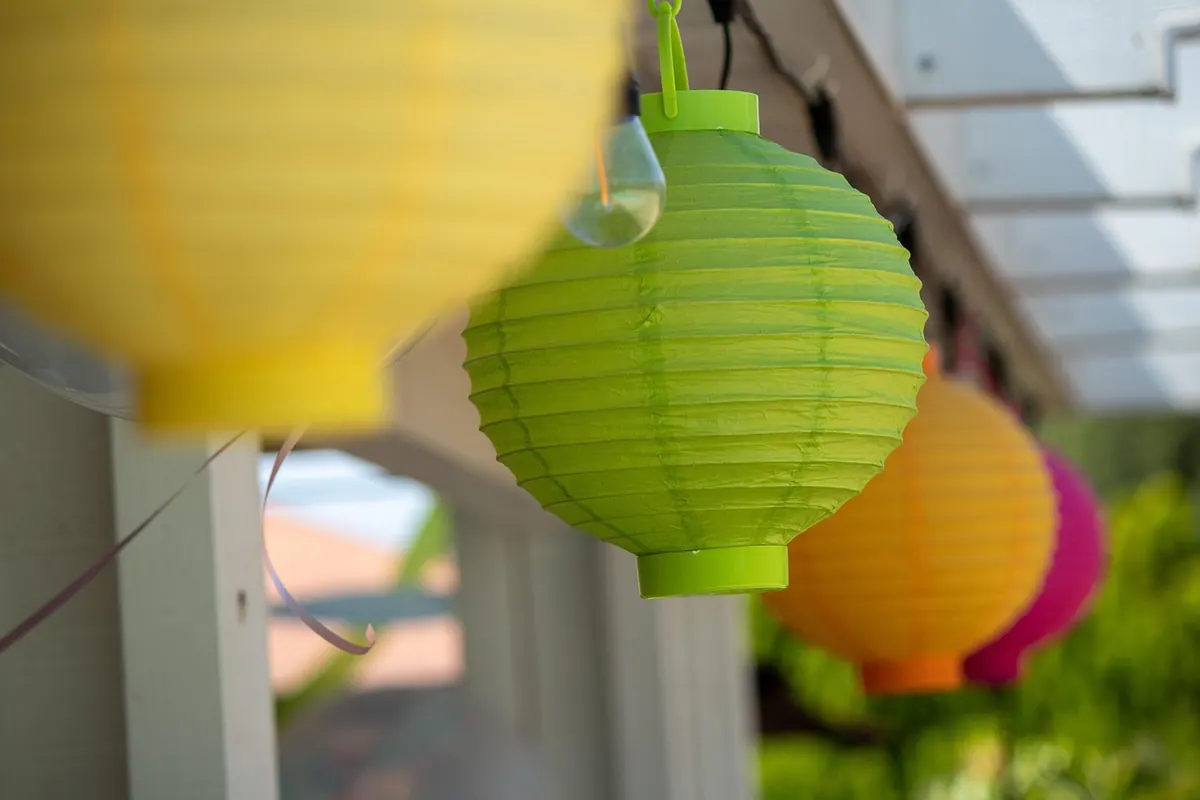
Photo: StockSnap / Pixabay

Bunting does not need an entire wall. Here is how to scale pennants, garlands and streamers for apartments,...

Clean, untangle, and roll your bunting before storing it in a cool, dark, breathable container—so next season's...
Copyright © 2026 Bunting Beacon. All Right Reserved.